
Audit Overview
Your store's untapped revenue potential — and how to unlock it
Why We Created This Audit
We analyzed voyagerharness.com the same way we've audited 350+ e-commerce stores — looking for the specific gaps between your current experience and what top-performing Home & Living (Pet Accessories) stores deliver. Every finding in this report is a revenue opportunity backed by industry data and competitive benchmarks.
What We Analyzed
- UX & Conversion Design findings
- Performance & Speedvs 3 competitors
- Technology & App StackPlatform + 10 apps
- Industry BenchmarksHome & Living (Pet Accessories)
Pages Analyzed
- Homepage findings
- Collection Pages findings
- Product Pages (PDP) findings
- Cart & Checkout findings
 This audit was prepared by Growisto — a CRO-led Website development team behind 167% conversion growth for Atomberg, 46% CR lift for TyresNmore, and 350+ e-commerce projects.
UX & Conversion Findings
Page-by-page analysis with visual comparisons against top Home & Living (Pet Accessories) stores
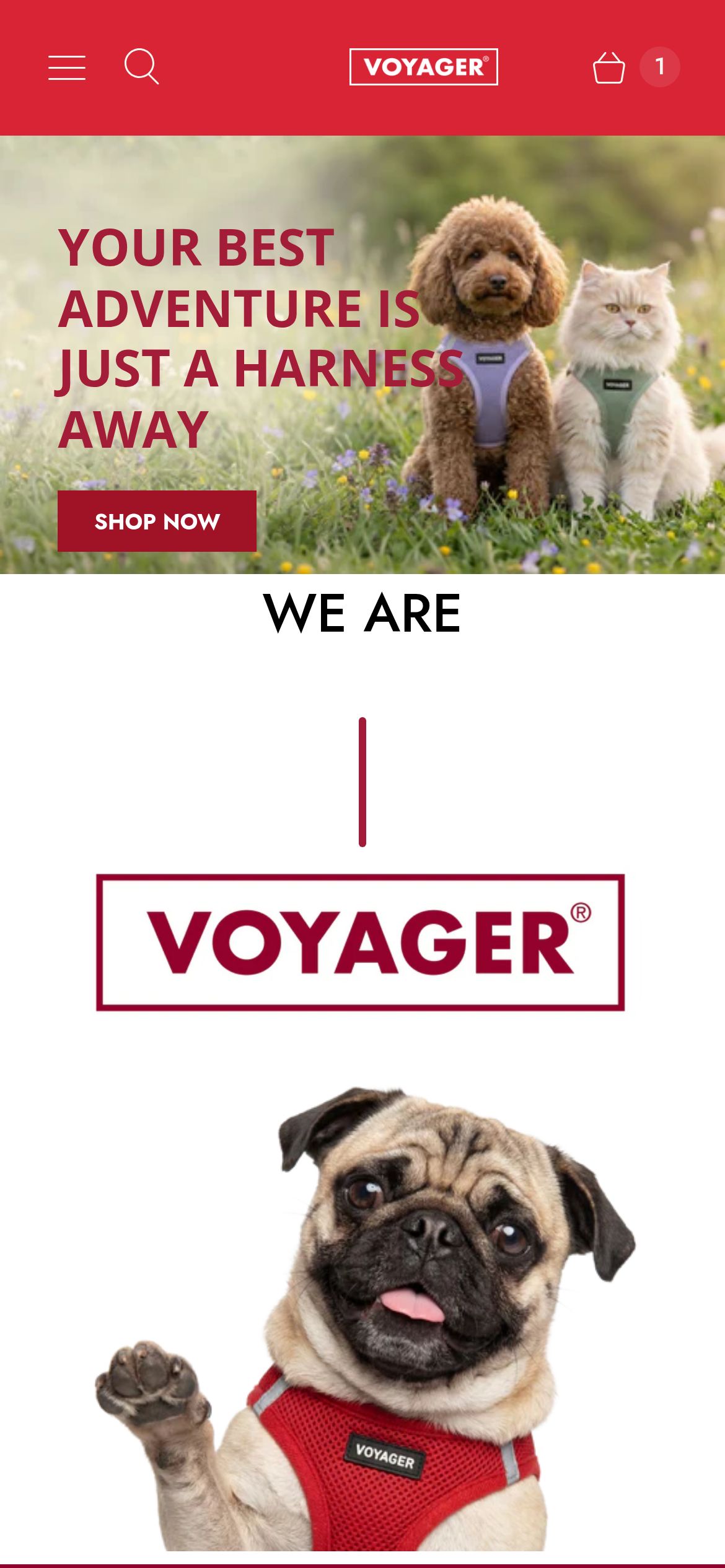

- The header search icon opens a search field but typing produces no autocomplete dropdown or instant product suggestions.
- Users must press Enter to see results.
- In a catalogue with 100+ SKUs across harnesses, toys, and accessories, the absence of predictive search forces shoppers to commit to a full search query rather than being guided to relevant products.
- Enable Shopify's native predictive search API (available on all Shopify plans) or install a lightweight search app (Searchanise free tier, or Boost Commerce).
- Predictive search showing product images + prices in the dropdown converts search intent into clicks 2–3x more effectively than enter-to-search.
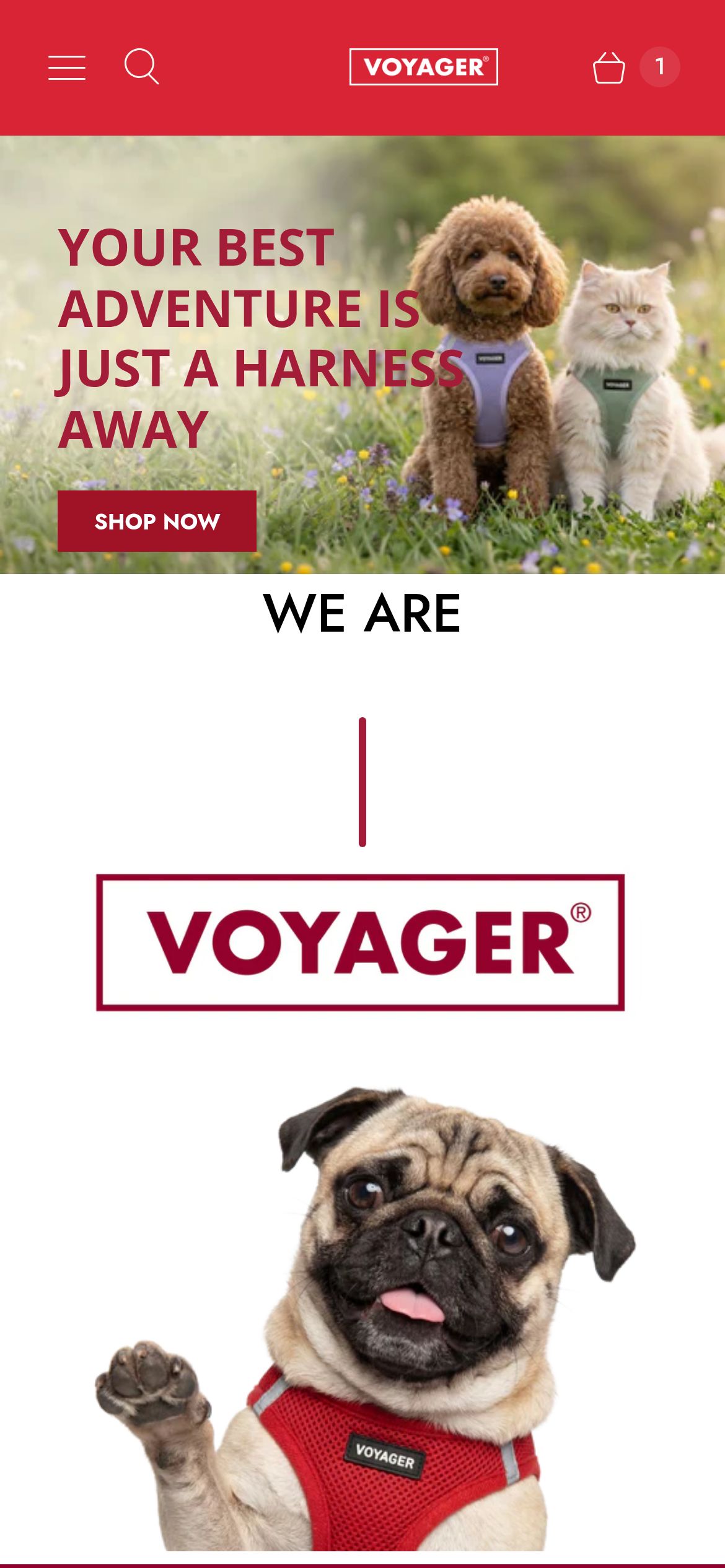

- The 'NEW ARRIVAL' product carousel on the homepage shows product tiles with image, title and price — but no ATC button, quick-add icon, or cart affordance.
- Tapping any tile navigates to the PDP, adding an unnecessary step for repeat customers or shoppers who already know what they want.
- Add a quick-add button to homepage product tiles — either a persistent 'Add to Cart' button below the price, or an ATC icon that appears on hover/tap.
- Shopify themes with Retina support this natively.
- Even a one-tap shortcut for 1-variant products can lift direct ATC conversions from the homepage.
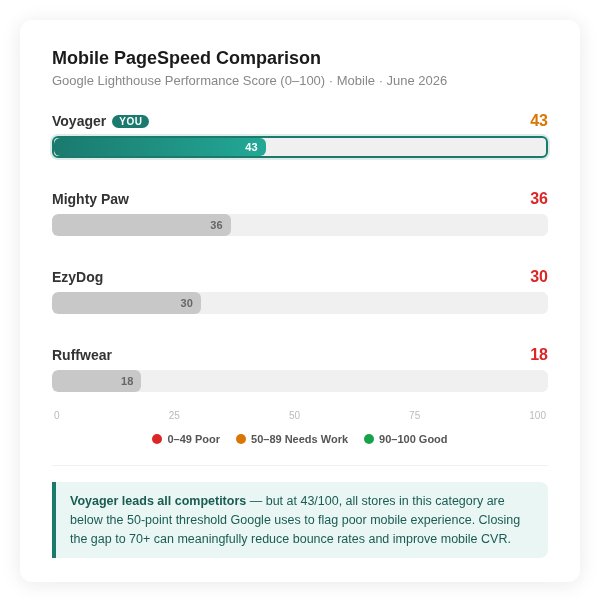
- Lighthouse lab data shows a mobile performance score of 43/100 with LCP of 7.6 seconds and TBT of 810ms.
- Desktop CLS is 0.279 (failing Core Web Vitals threshold of 0.1).
- The site loads 49 JavaScript files including Yotpo (536 elements), Firework video commerce, Drip email, Facebook Pixel, Reddit Pixel, Amazon Pixel, GTM, GA4, and Instafeed — a heavy app stack that is degrading mobile load speed significantly.
- Audit and defer non-critical scripts: Firework, Instafeed, and advertising pixels (Reddit, Amazon) can be loaded asynchronously after the main content.
- Reduce Yotpo initialisation to lazy-load below-fold.
- Target a mobile Lighthouse score of 60+ and LCP under 4s. The desktop CLS of 0.279 indicates layout shifts — likely from the Yotpo or Firework widgets loading and pushing content.

- The footer newsletter form ('JOIN OUR PACK / Sign up to get the latest on sales, new releases and more...') offers no discount or reward incentive.
- Given that Voyager uses Drip for email marketing and runs promotional campaigns, the email list is a key revenue channel — but the sign-up proposition is generic and value-free.
- No popup or exit-intent capture exists either.
- Add a 10–15% off first order incentive to the email capture form and consider an exit-intent popup triggered after 30 seconds of inactivity.
- 'Join 50,000+ pet parents — get 10% off your first order' is a proven formula.
- Mighty Paw uses a '15% off + training tips' offer to grow their list. Even moving the email form above the footer (e.g. a dedicated section) would increase visibility.
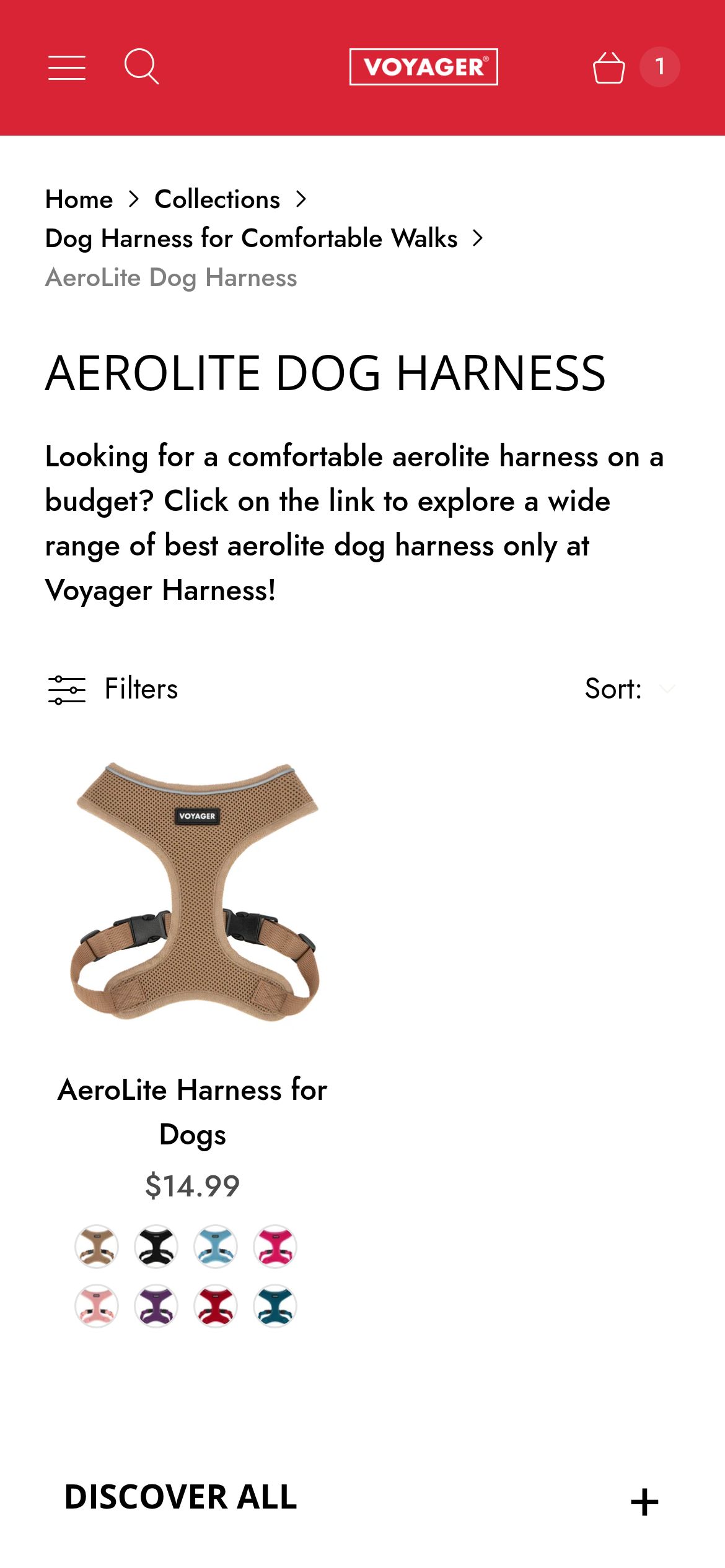
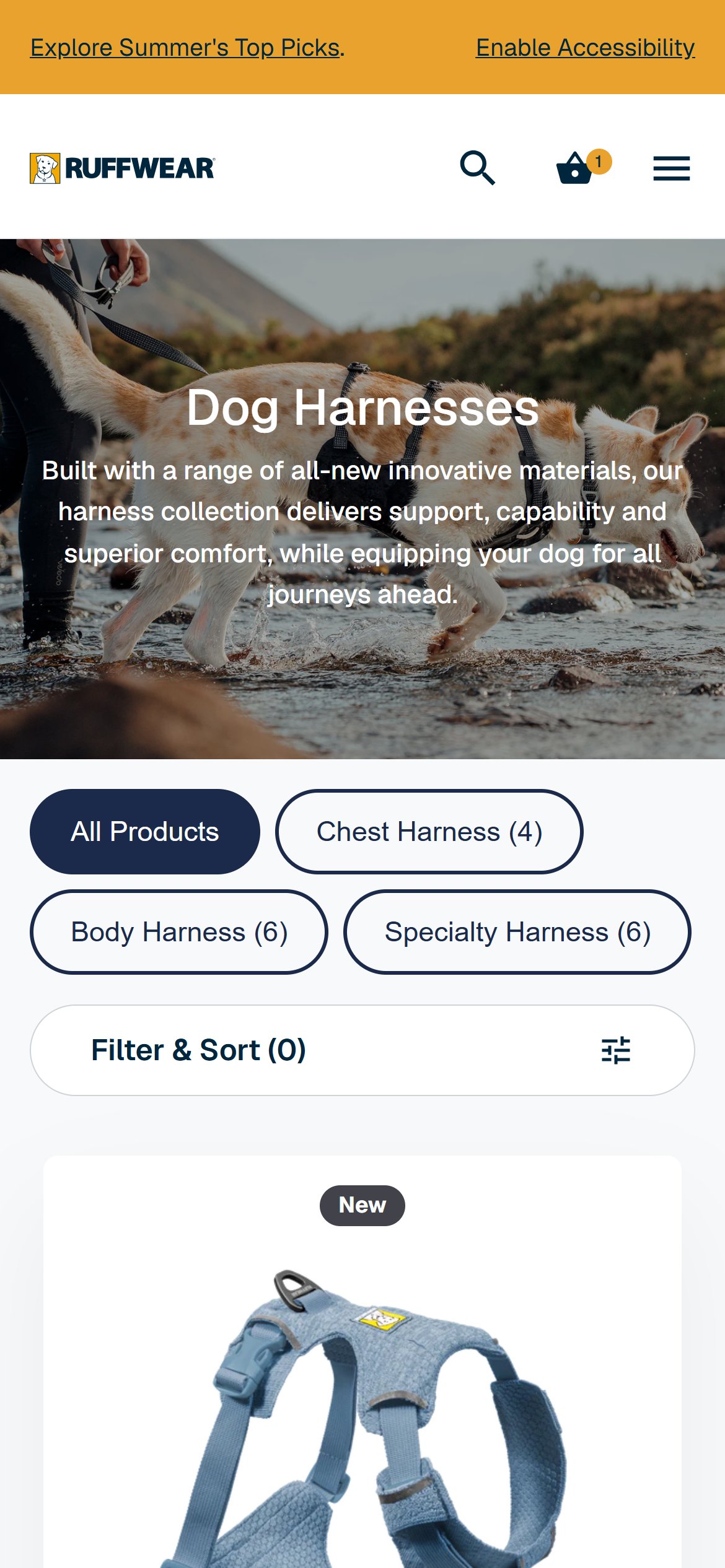
- All product cards across the /collections/all page render a `.shopify-product-reviews-badge` element but it is empty — no star rating or review count is visible on any card.
- Cards show only product title, price, and color swatches.
- Shoppers cannot assess product quality during the browse phase and must click into every PDP to find reviews.
- Configure the Yotpo star-rating widget to render on collection cards.
- Alternatively, use the Shopify native product reviews badge or a lightweight Yotpo bottom-line widget.
- Even showing a single number like '★ 4.8 (200)' on the top-selling harness cards would meaningfully lift click-through and add-to-cart rates.
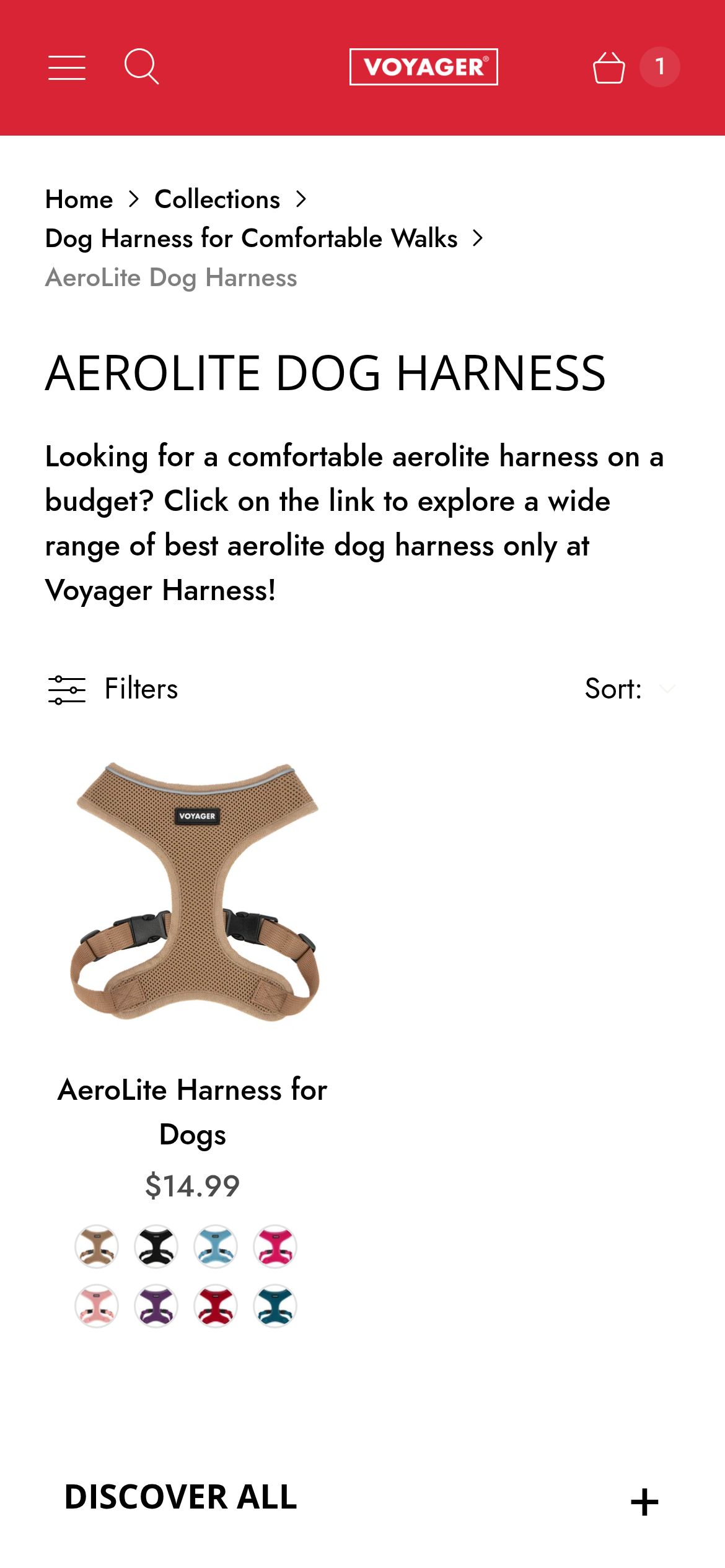
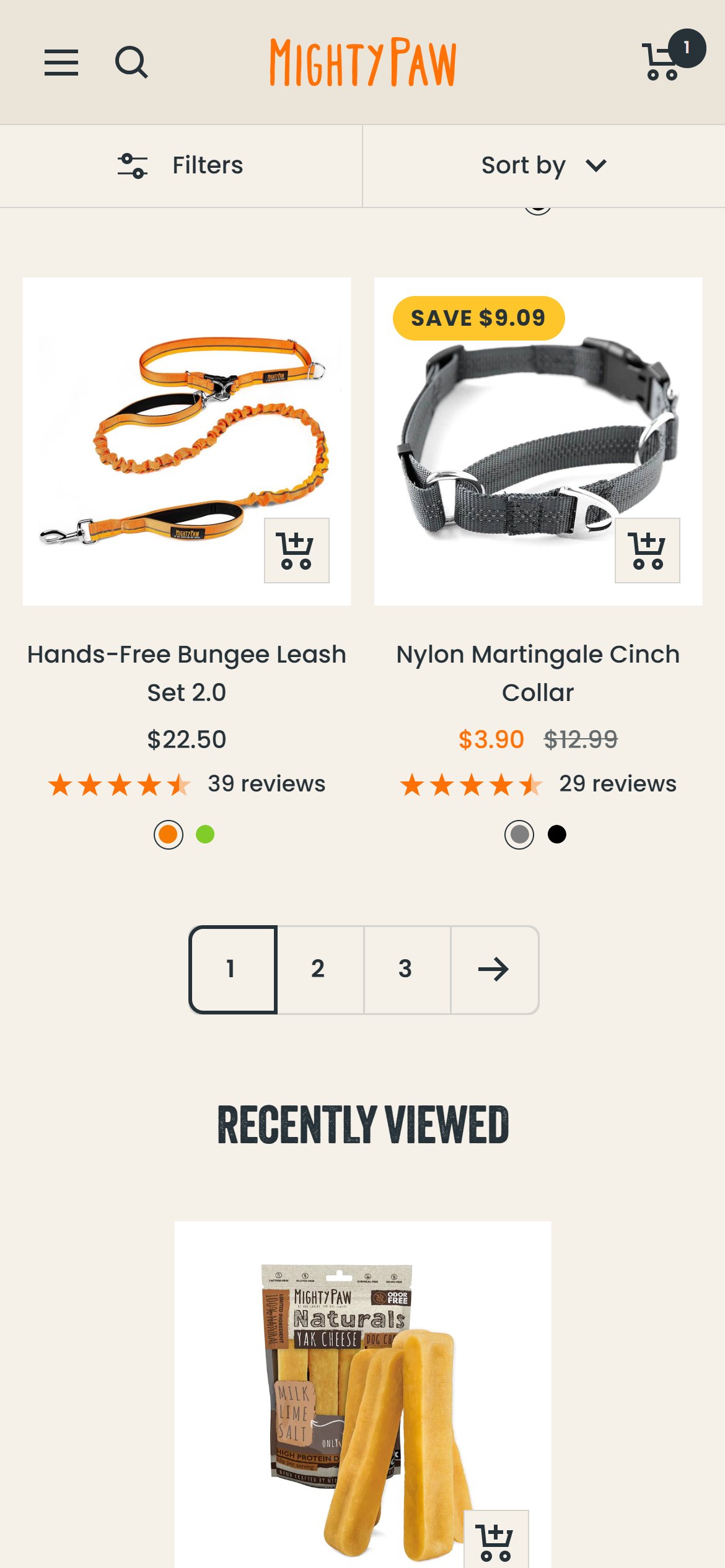
- The /collections/all page loads all 24 products at once with no pagination controls, load-more button, or infinite scroll.
- The probe confirmed pagination DOM is present (disabled previous button) but functionally the initial page load renders the full catalogue.
- For larger sub-collections this will worsen as the catalogue grows.
- Implement numbered pagination or a 'Load More' button showing 12–24 products per page.
- This reduces initial page weight, improves page load speed on mobile, and gives shoppers a cleaner browsing experience.
- Shopify's native pagination is a simple theme setting change.
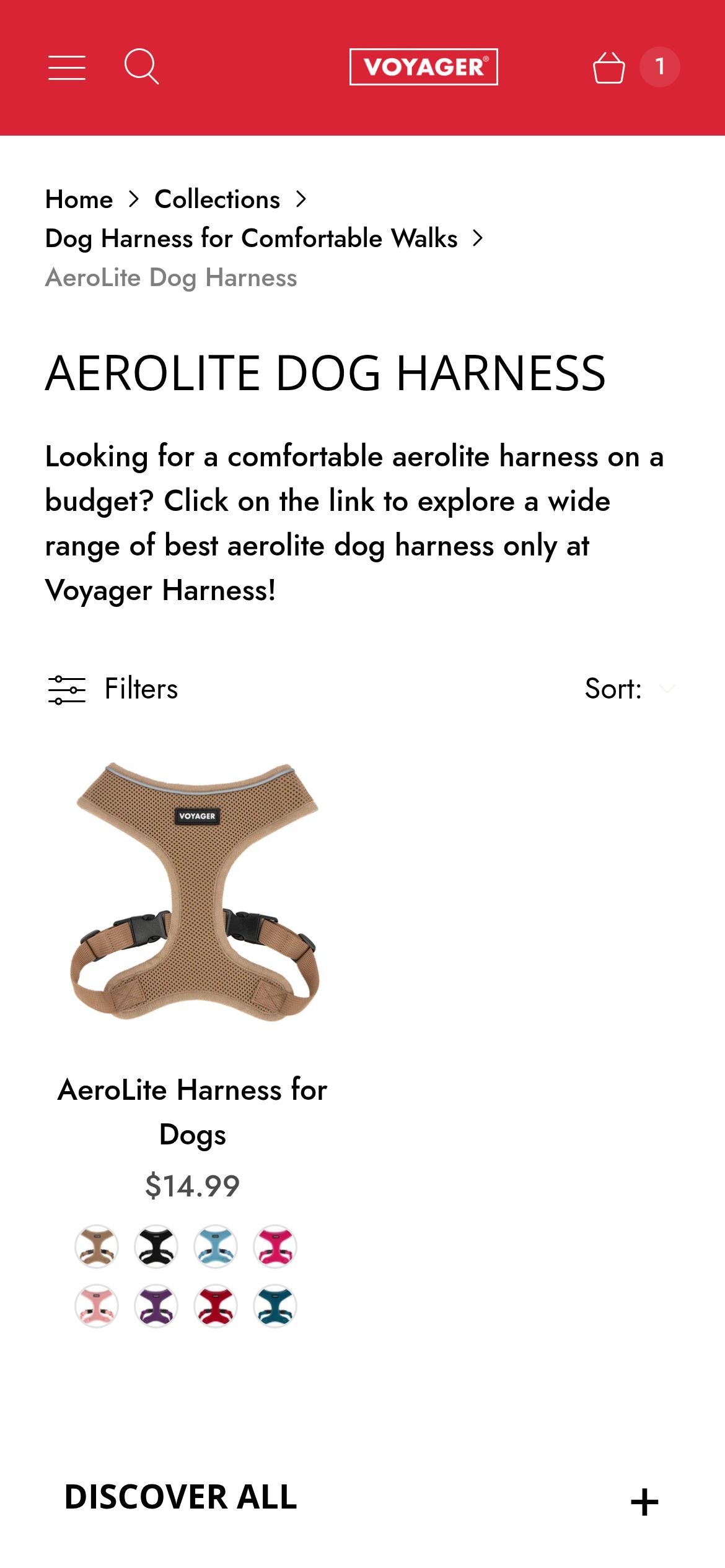
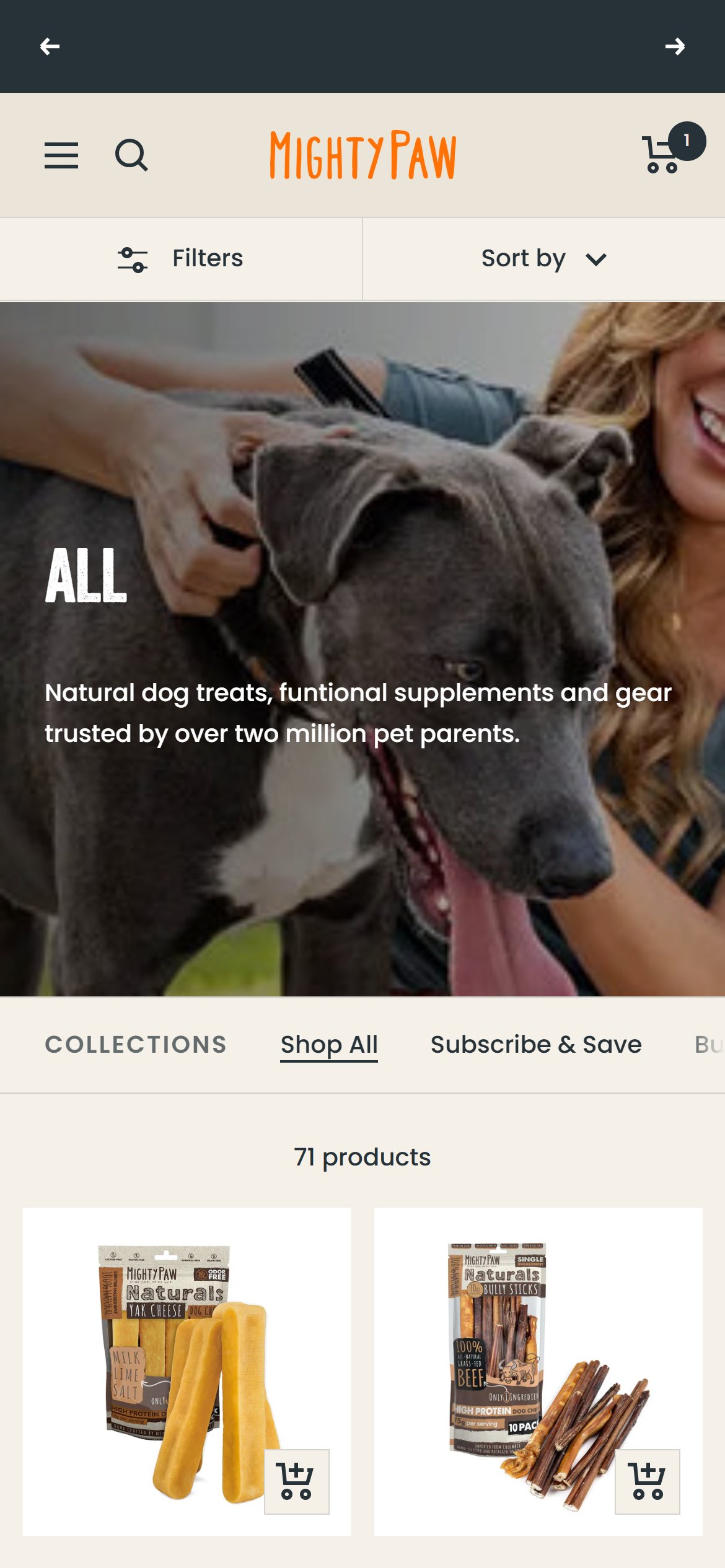
- The collection filter bar includes Price, Product type, Size, Color and Breed filters — but the price filter uses only pre-defined buckets (if any price filter is shown at all).
- No drag-handle slider or min/max input allows users to set a custom price range.
- With products ranging from $6.99 to $35+, a price range filter helps shoppers self-segment by budget.
- Add a price range slider to the filter panel.
- This is a standard Shopify theme feature that can typically be enabled in theme settings or via the Boost Commerce filter app.
- A simple 'Under $15 / $15–25 / $25+' tiered structure is the minimum; a drag slider is the ideal.
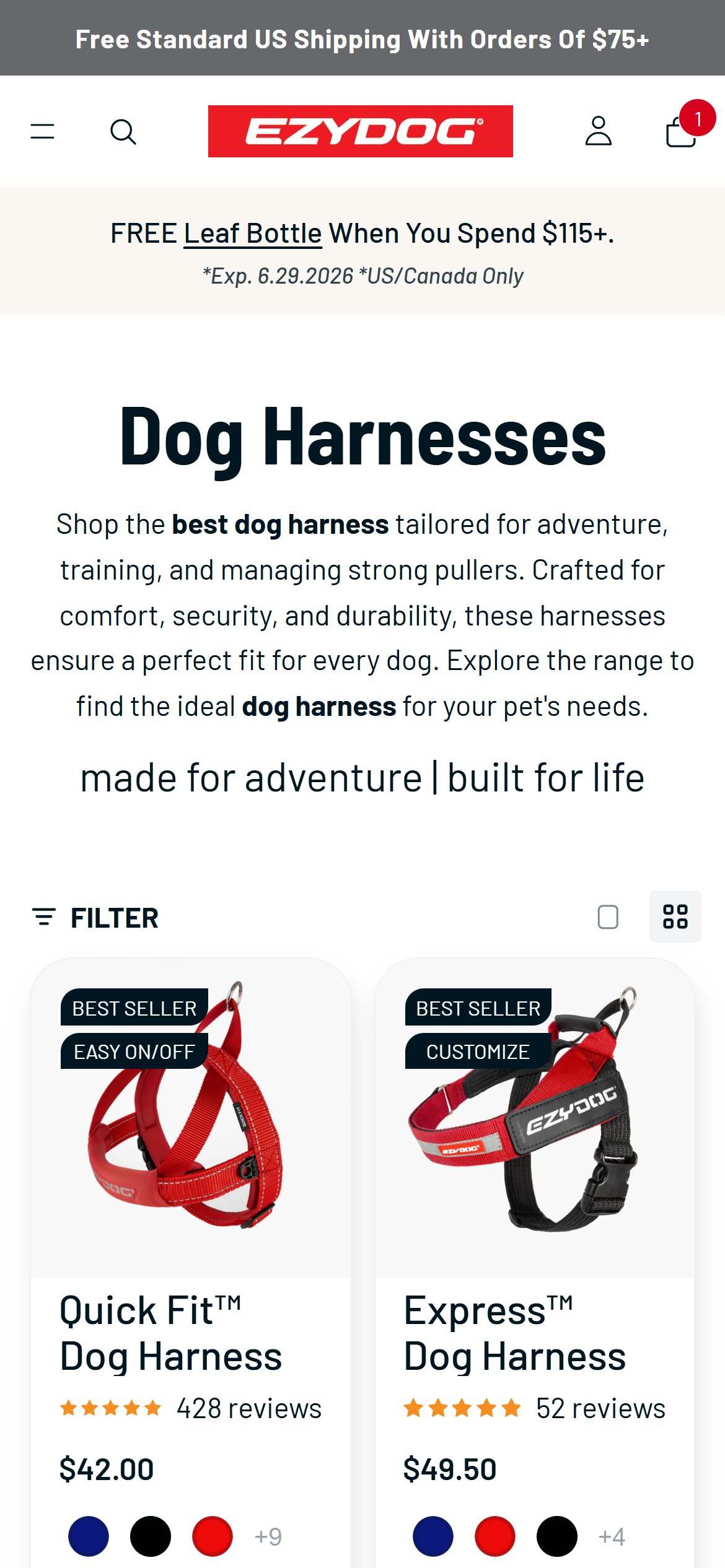
- The `.product-thumbnail__product-stickers` container is present on every card but empty — no 'Bestseller', 'New', 'Sale', or 'Top Rated' badges are rendered on any product card.
- With 100+ SKUs, shoppers have no visual shortcut to identify high-performers, new arrivals, or discounted items during the browse phase.
- Enable product sticker/badge labels in the Retina theme settings.
- At minimum, label: (1) top-selling products as 'Bestseller', (2) products launched in the last 60 days as 'New', (3) sale products with a 'Sale' badge.
- These are native Retina theme features that appear to be configured but not populated. EzyDog uses 'New' and 'Sale' labels prominently on collection cards.
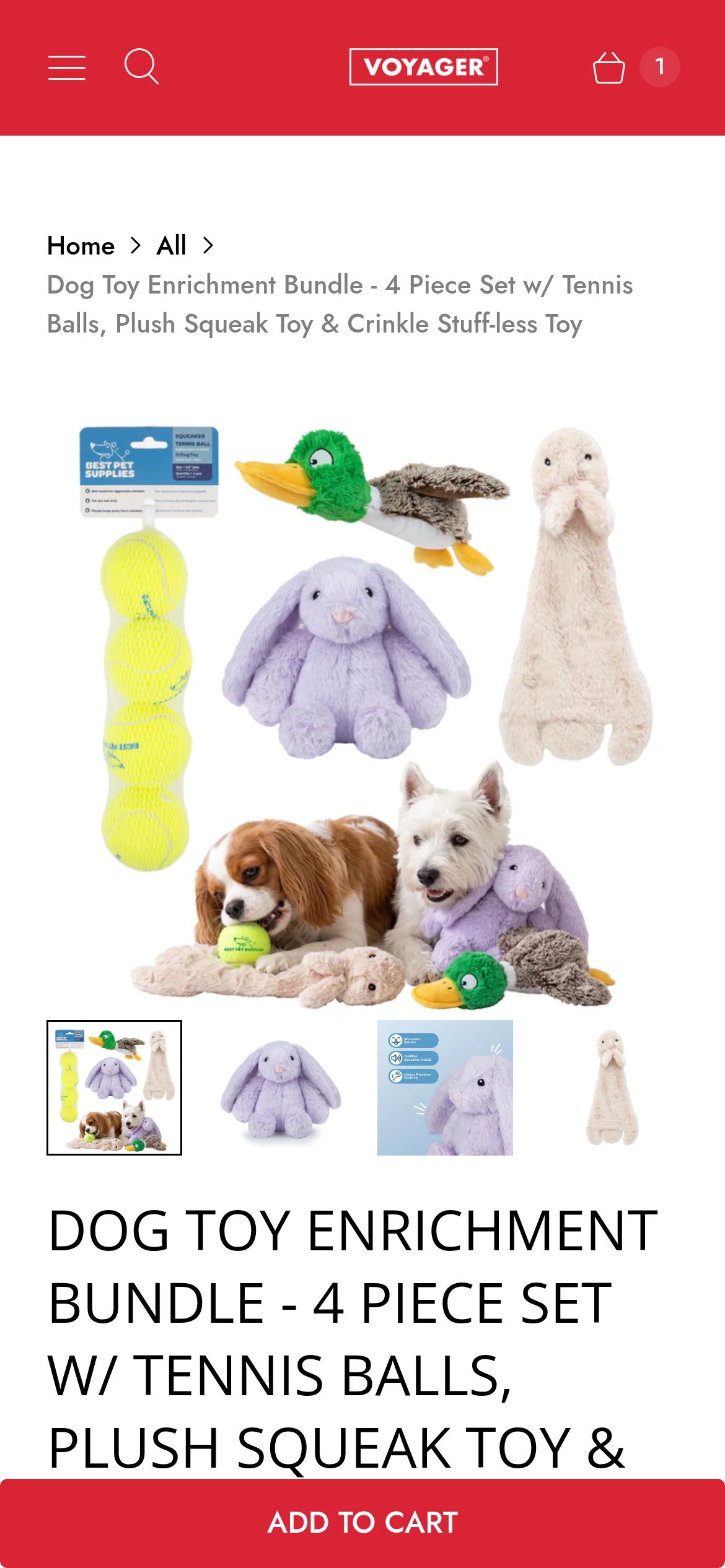
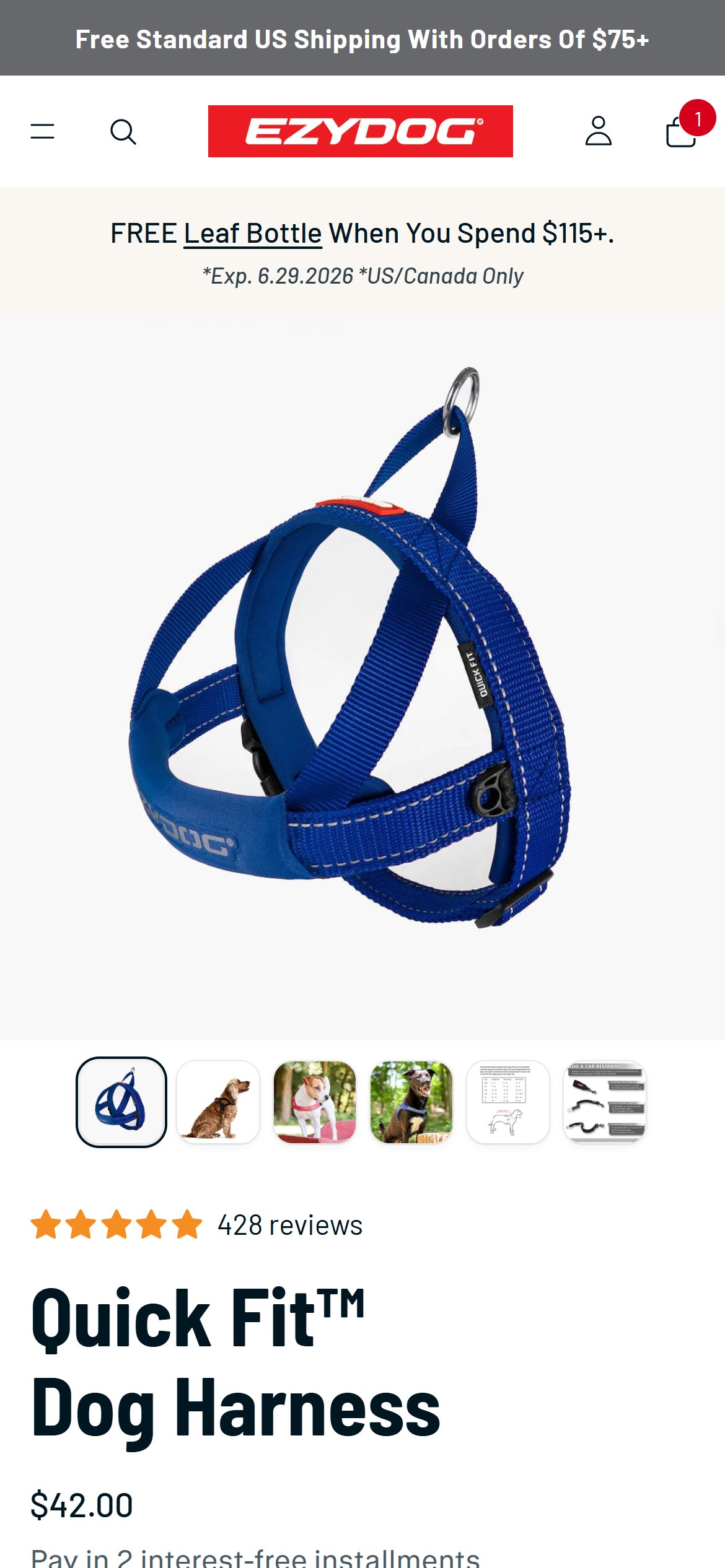
- The probed PDP (Dog Toy Enrichment Bundle) shows '0 Reviews' with no star widget rendered above or below the fold.
- The Yotpo integration exists but is not populating ratings on newer product listings, meaning shoppers land on a bare product page with no social proof signal to validate purchase intent.
- Ensure Yotpo star-rating widget renders on every PDP, including products with zero reviews (show empty stars + 'Be the first to review').
- For the broader catalogue, migrate review data to all applicable PDPs.
- The Step-In Air Harness with 200 reviews is a model — replicate its star-rating display sitewide.
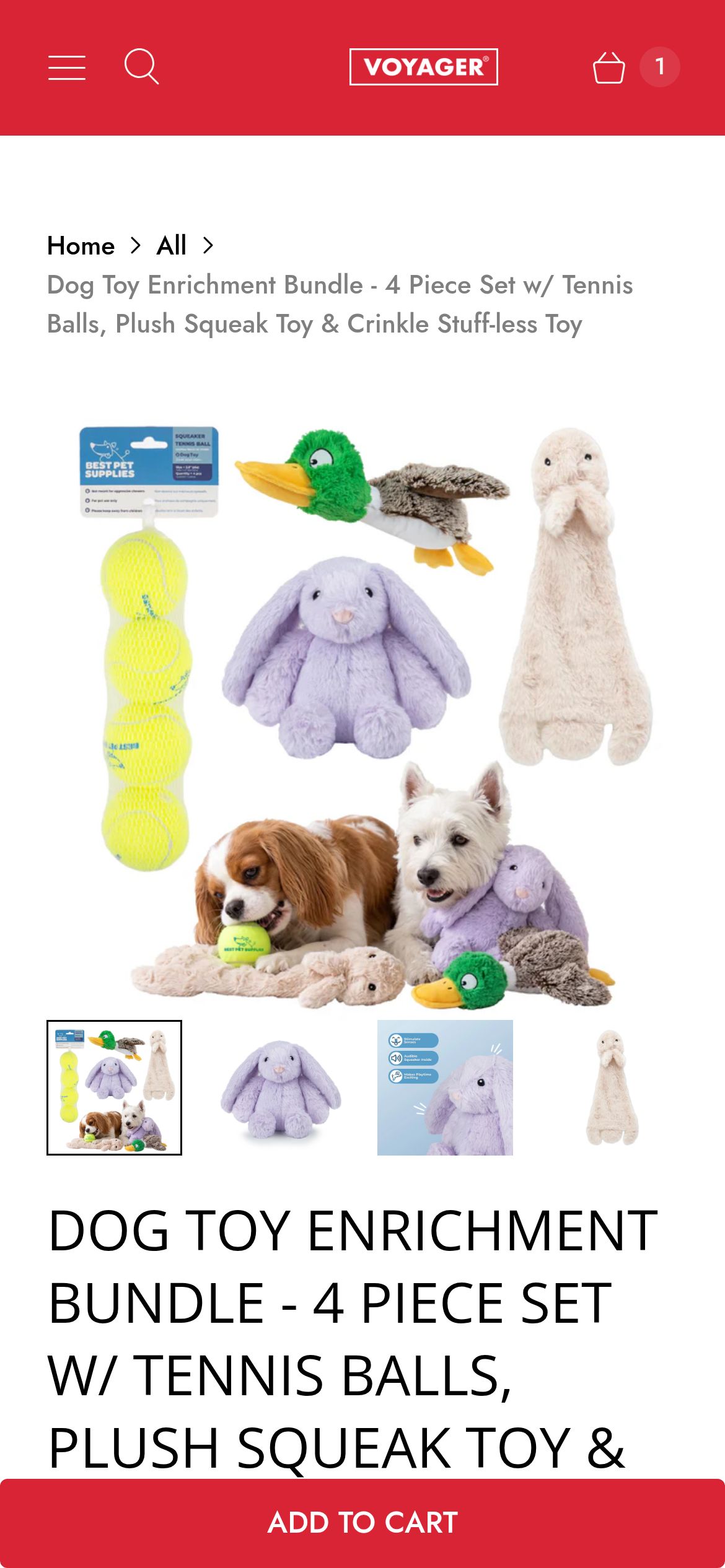

- Across all tested PDPs, the zone between the price line and 300px below the ADD TO CART button contains no trust indicators: no returns policy icon, no secure checkout badge, no free shipping callout, no guarantee text.
- The ATC zone goes: price → color swatches → size selector → quantity → ADD TO CART → Buy with ShopPay → More payment options.
- The absence of reassurance at the moment of commitment is a friction point for first-time buyers.
- Add 3 icon + text trust indicators directly below the ATC button: '14-Day Returns', 'Free Shipping Over $X', 'Secure Checkout'.
- These are 1–2 line items in the theme's product template and require no app.
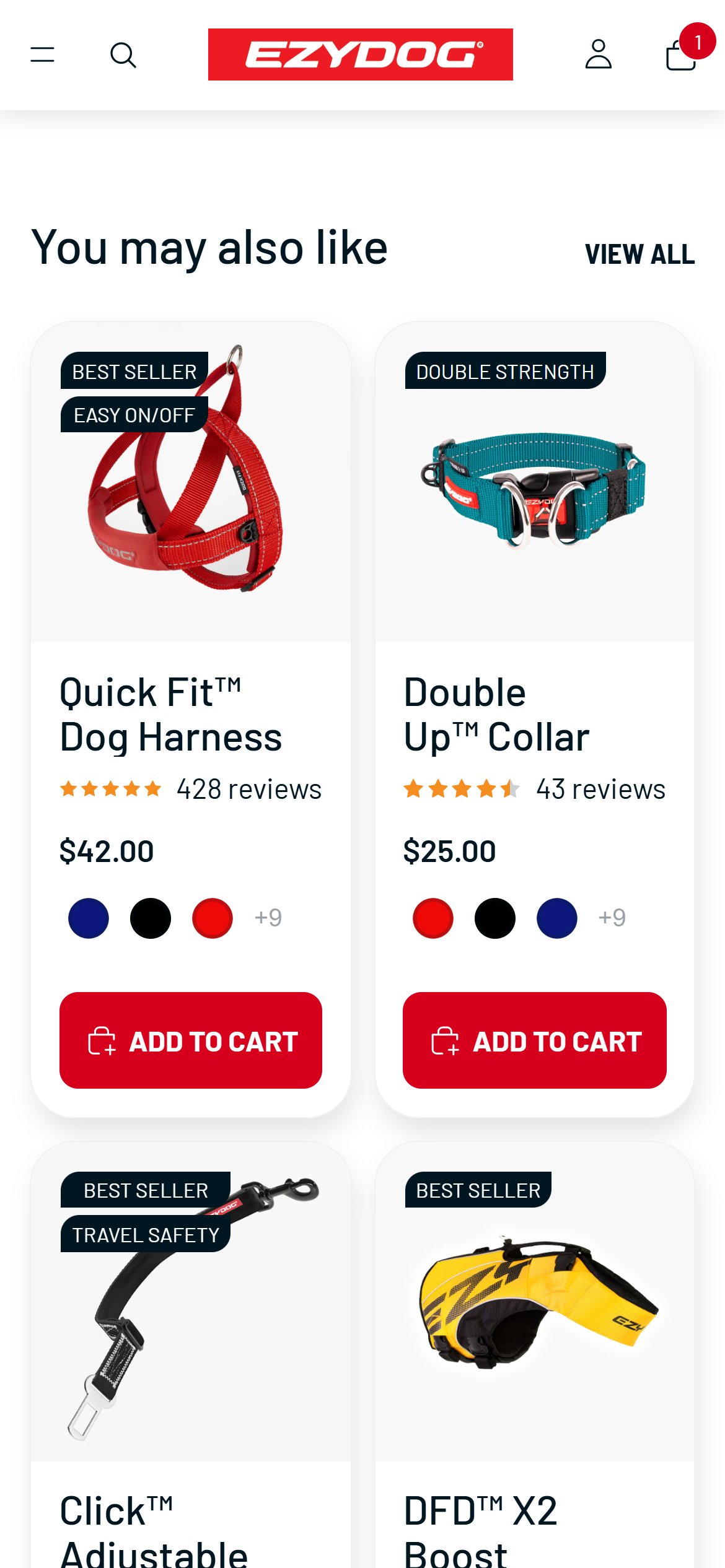
- EzyDog uses a 3-icon row (returns, shipping, warranty) below ATC on all PDPs.
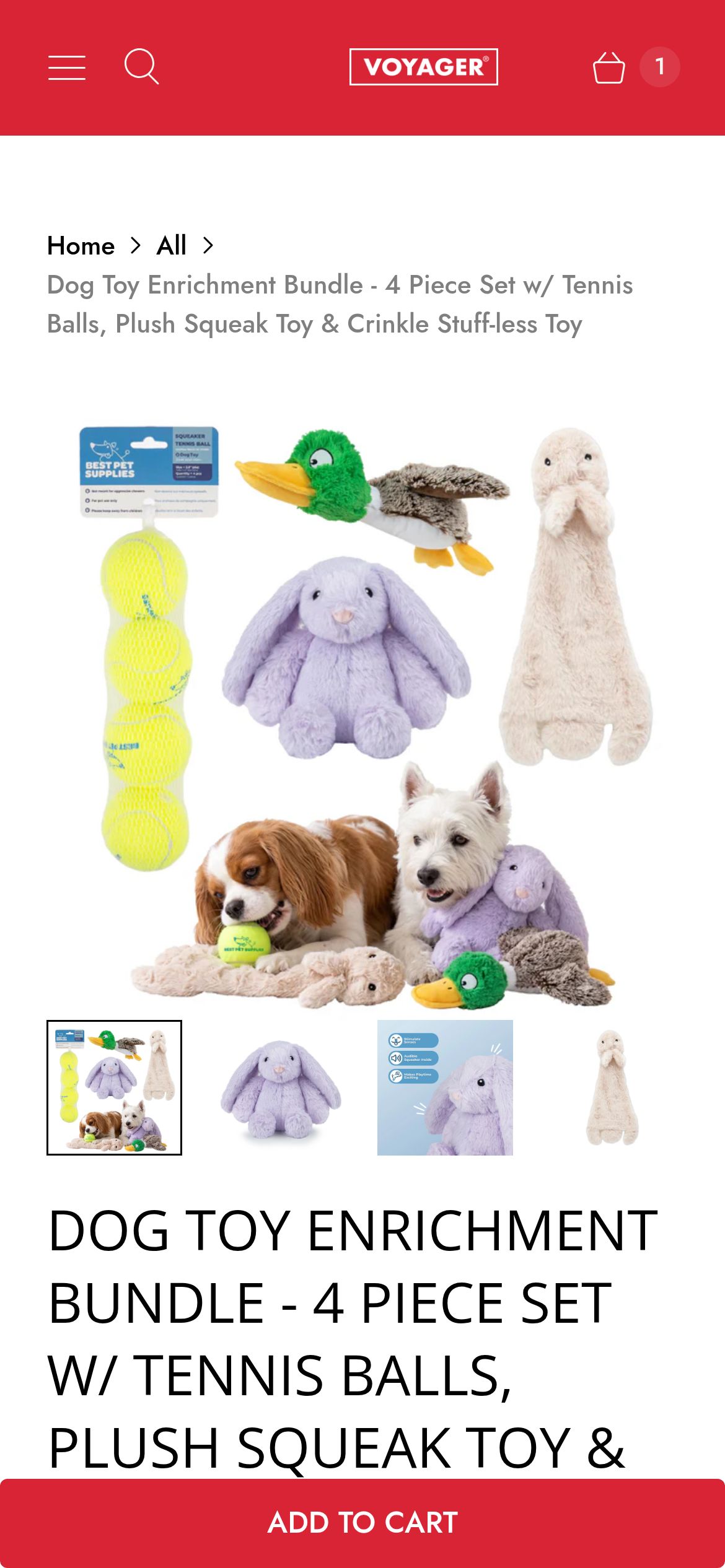
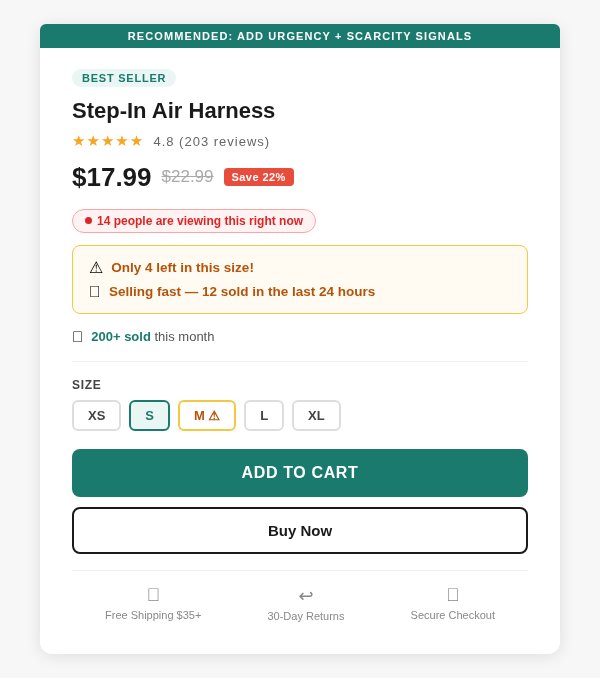
- PDPs show no inventory signals ('Only 3 left!'), no social proof velocity ('50+ ordered this week'), no countdown timers, and no 'X people viewing this' indicators.
- The purchase decision zone between the price and the ATC button is entirely static — no nudge encourages immediate action.
- Add low-stock badges when inventory drops below a threshold (e.g.
- 'Only 4 left in this size').
- This is a standard Shopify feature. For high-velocity SKUs like the Step-In Air Harness, consider adding a social proof counter ('200+ sold this month') using a simple metafield. These signals are particularly effective at $14–20 price points where impulse decisions are common.
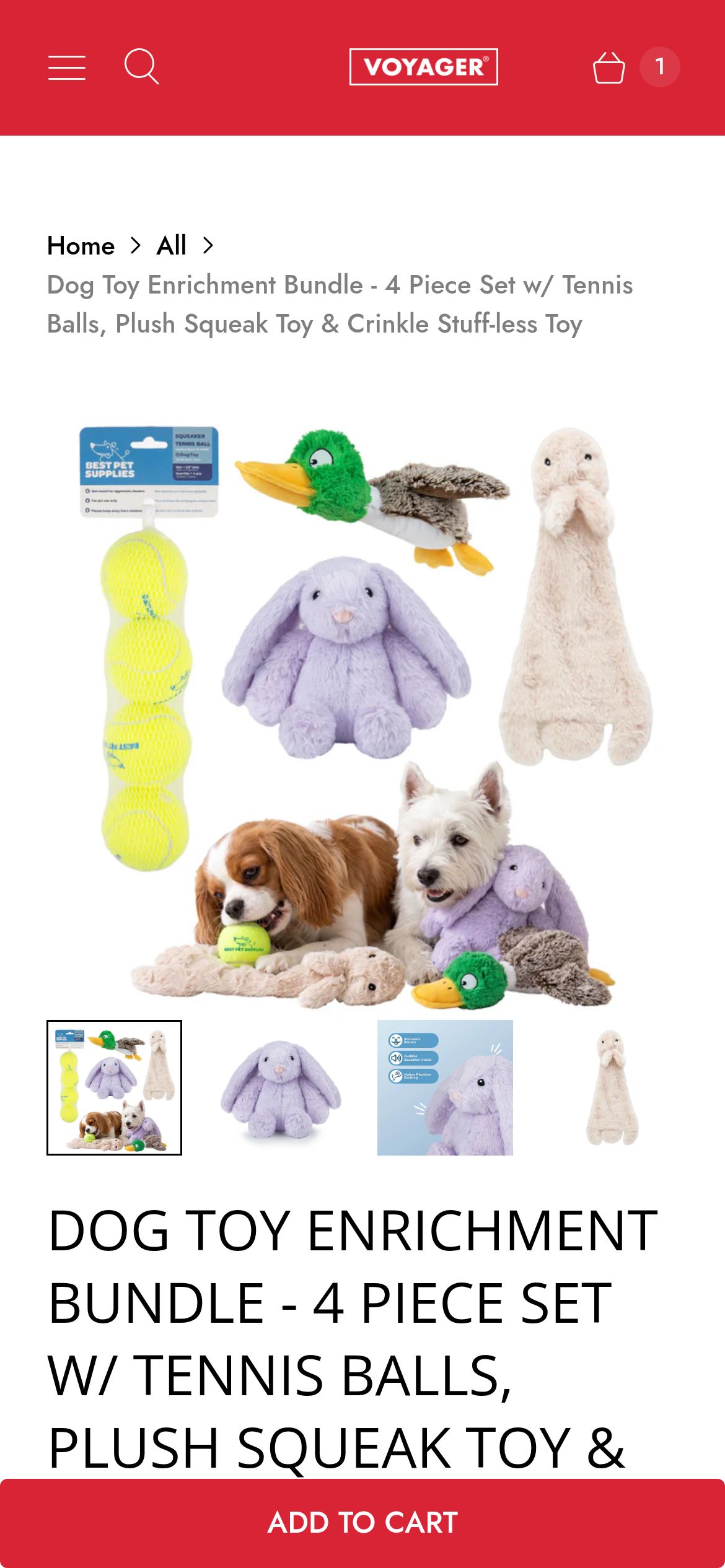
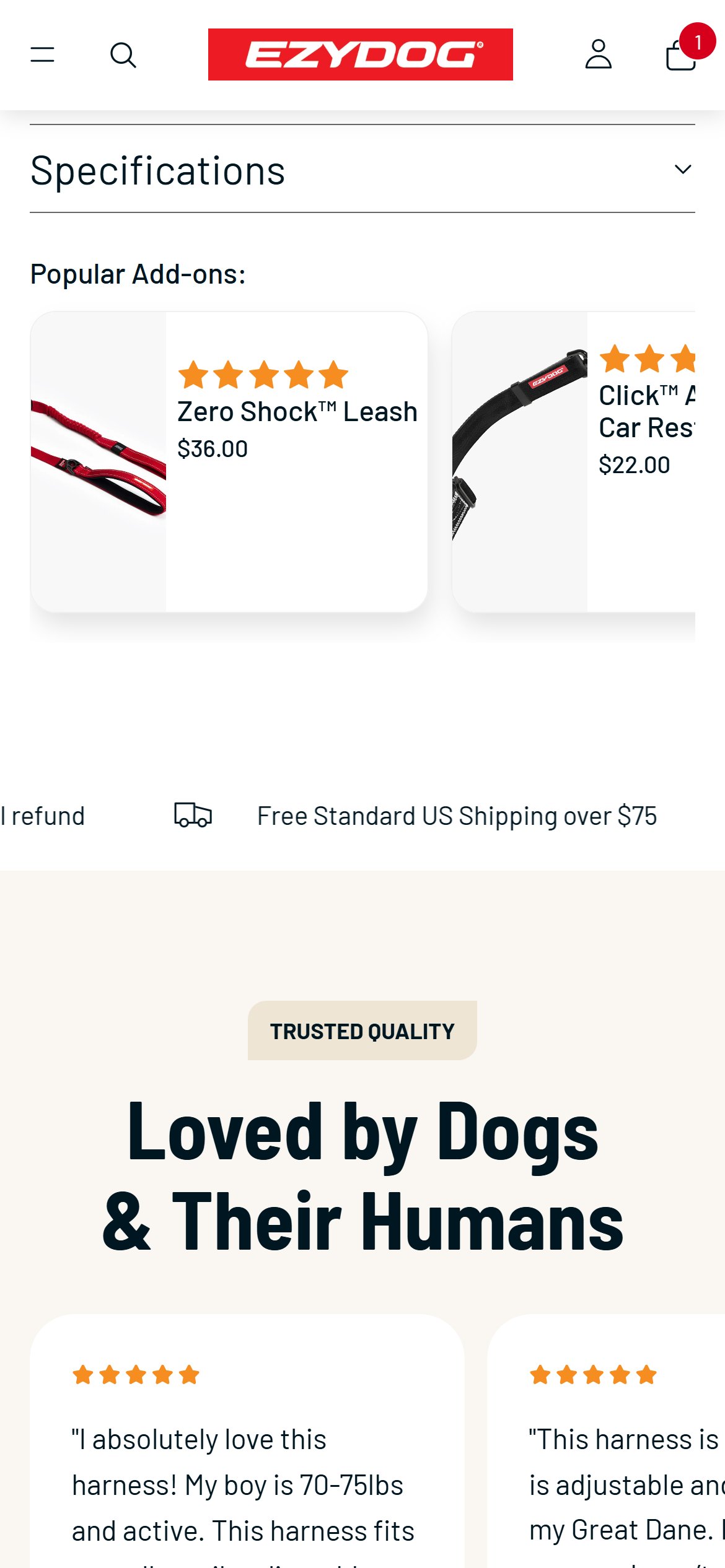
- PDPs show no estimated delivery date or shipping timeline near the ATC button.
- US shoppers increasingly expect to know 'When will this arrive?' before committing to purchase.
- The only shipping reference is in the footer ('We ship to addresses in the contiguous United States') — far from the purchase decision zone.
- Add a dynamic delivery estimate line below the ATC button: 'Order in the next 4 hours — ships today.
- Arrives by [date].' This can be implemented via a simple theme snippet using Shopify's fulfillment data, or via apps like Estimated Delivery Date by Omega.
- EzyDog shows delivery windows directly in the product info zone.
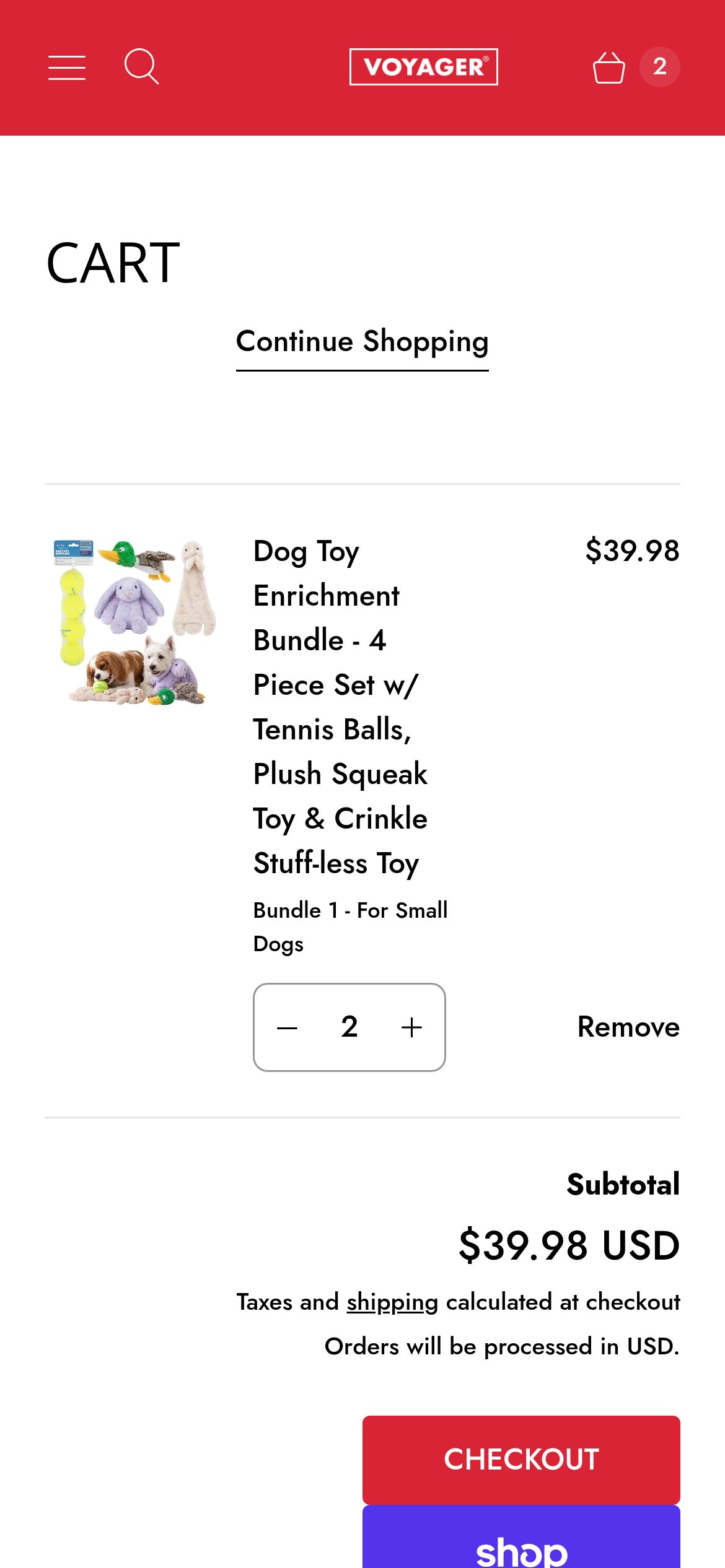
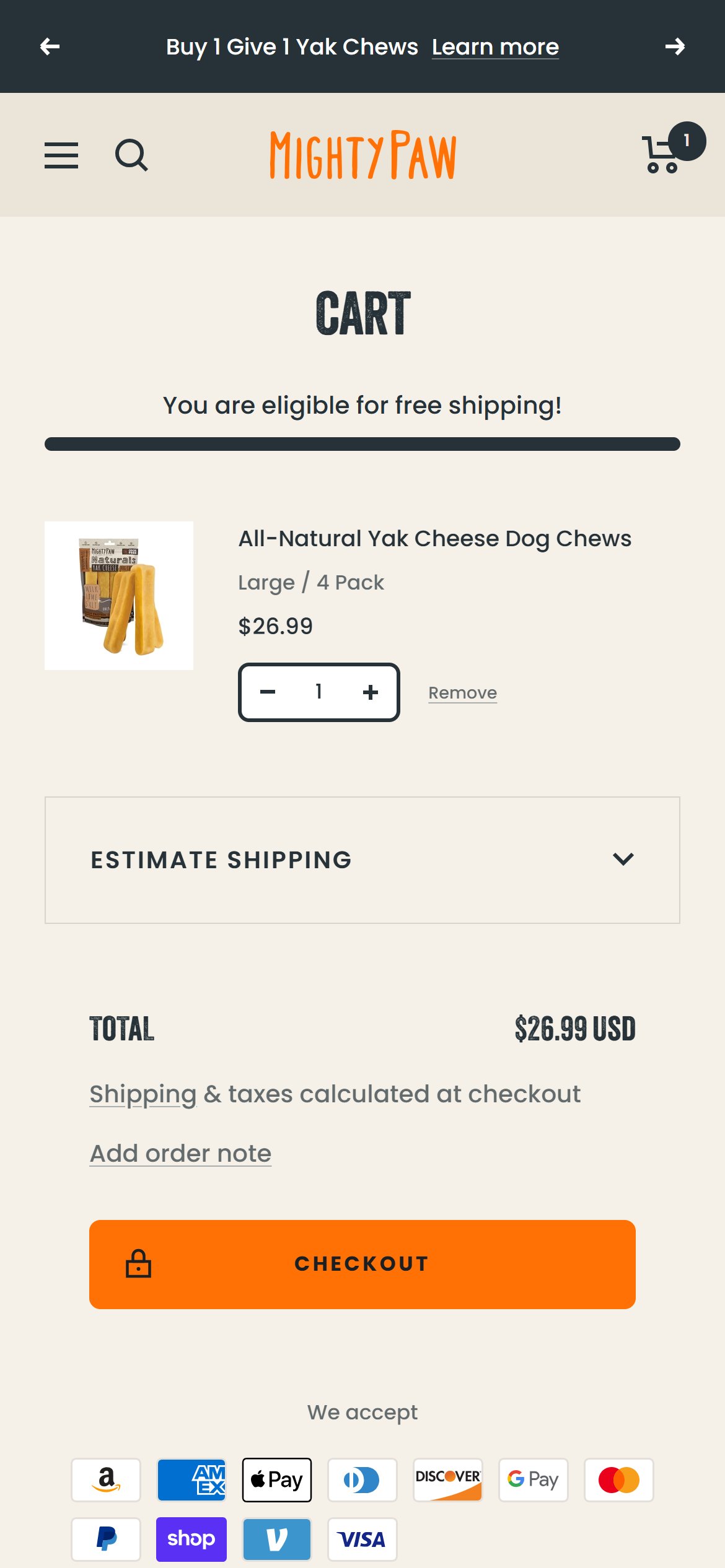
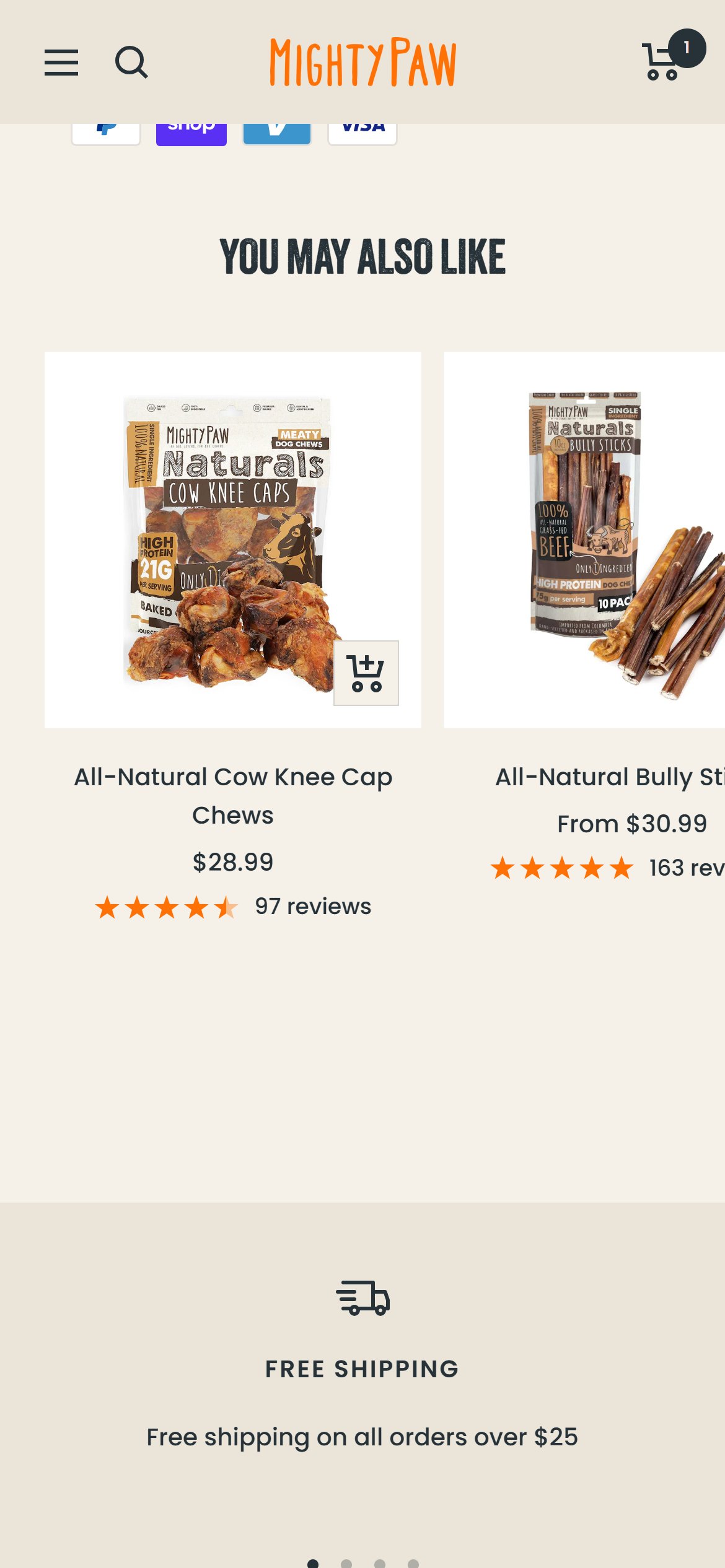
- The cart page shows product, price, quantity and a bare checkout button — no free shipping threshold indicator or progress bar is present.
- With an AOV of ~$15–20, a free shipping nudge ('Add $X more for free shipping') is the single highest-ROI cart conversion tool available and is conspicuously absent.
- Add a free shipping progress bar above the cart summary.
- Set the threshold at a value that nudges AOV uplift — e.g.
- 'You're $5.01 away from free shipping' when cart = $19.99. Mighty Paw uses this pattern with a $25 threshold. At Voyager's price point this can meaningfully increase units-per-order.
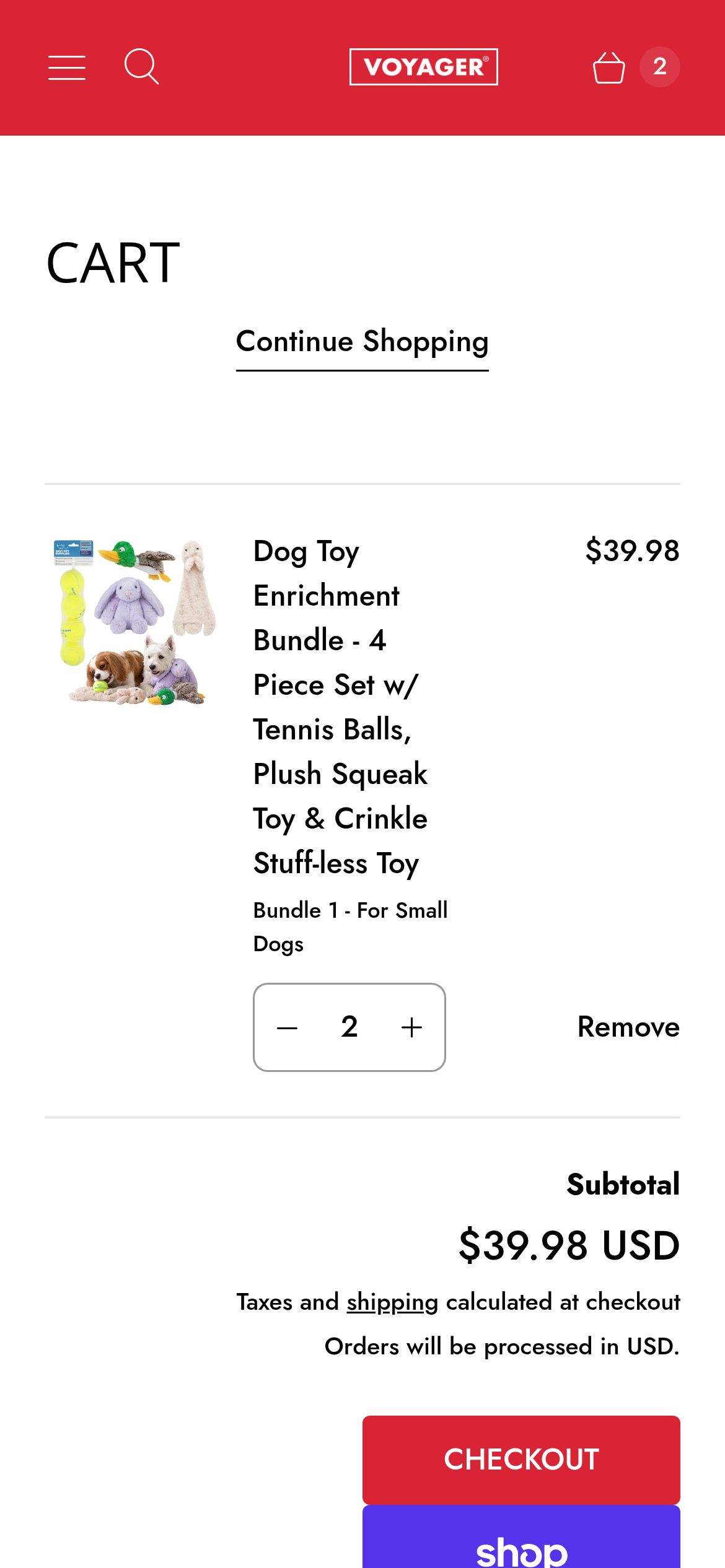
- The cart page (confirmed with item seeded) shows only the cart item, subtotal, and checkout buttons — no 'You May Also Like', 'Frequently Bought Together', or any product recommendation module exists.
- The cart is the highest-intent page on the site and presents zero opportunity to increase basket size.
- Add a cart cross-sell section showing 2–3 complementary products: harnesses for the other pet (cat/dog), leashes, or toys.
- At Voyager's price point ($14–20) the barrier to adding a second item is low — a well-placed recommendation can increase units per order by 0.3–0.5x.
- ReConvert or theme-native recommendations are low-cost options.
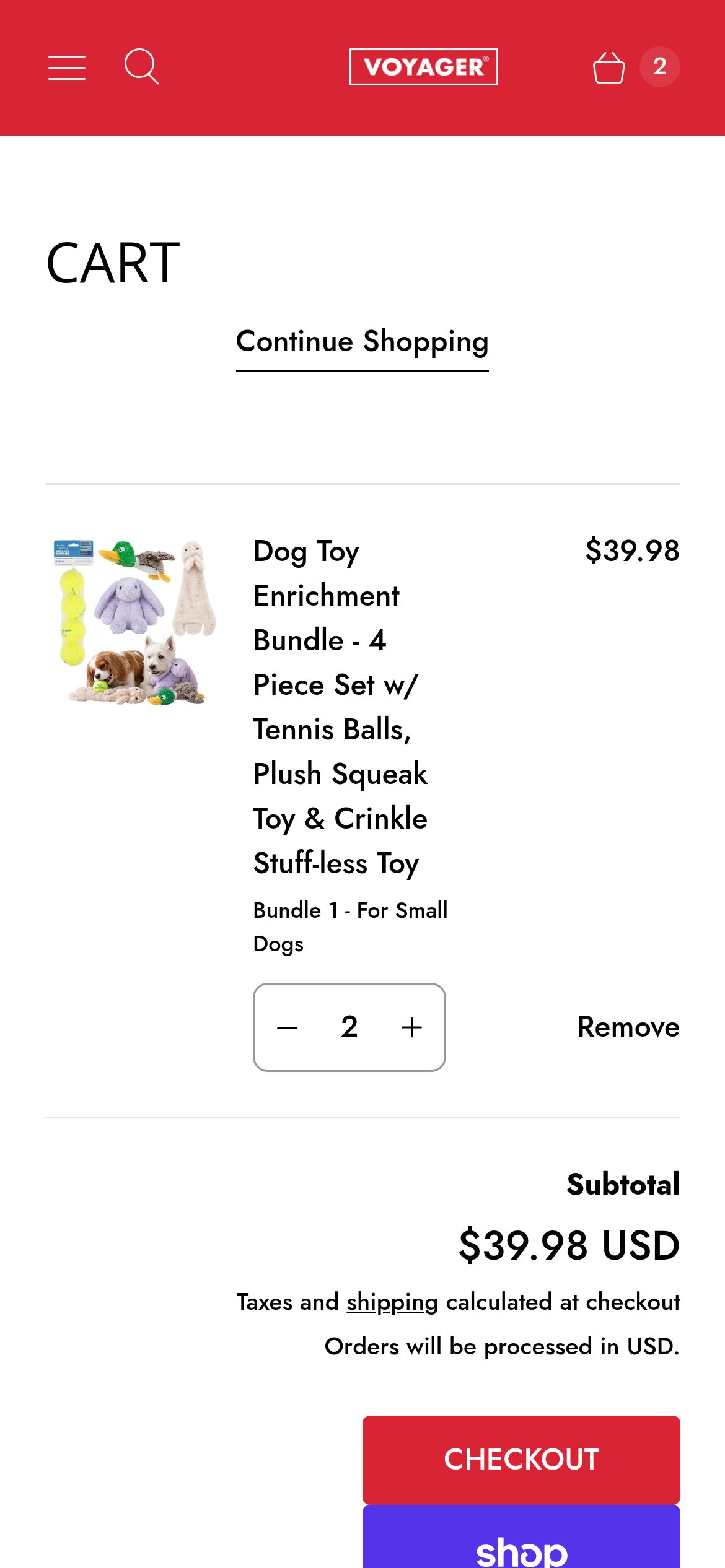
- The cart page (verified with item seeded) contains only the product row, subtotal line, 'Taxes and shipping calculated at checkout' note, and the checkout button.
- No payment trust icons (Visa/MC/Amex logos), no 'Secure Checkout' badge, no returns reminder, and no satisfaction guarantee are present.
- The cart is the last conversion gate and has zero reassurance signals.
- Add a payment icons row (major card logos + PayPal) and a 'Secure Checkout' badge below the checkout button.
- Also add a brief returns reminder ('14-day hassle-free returns').
- These are typically theme-level additions requiring no app. EzyDog uses a clean trust row below their cart checkout button.
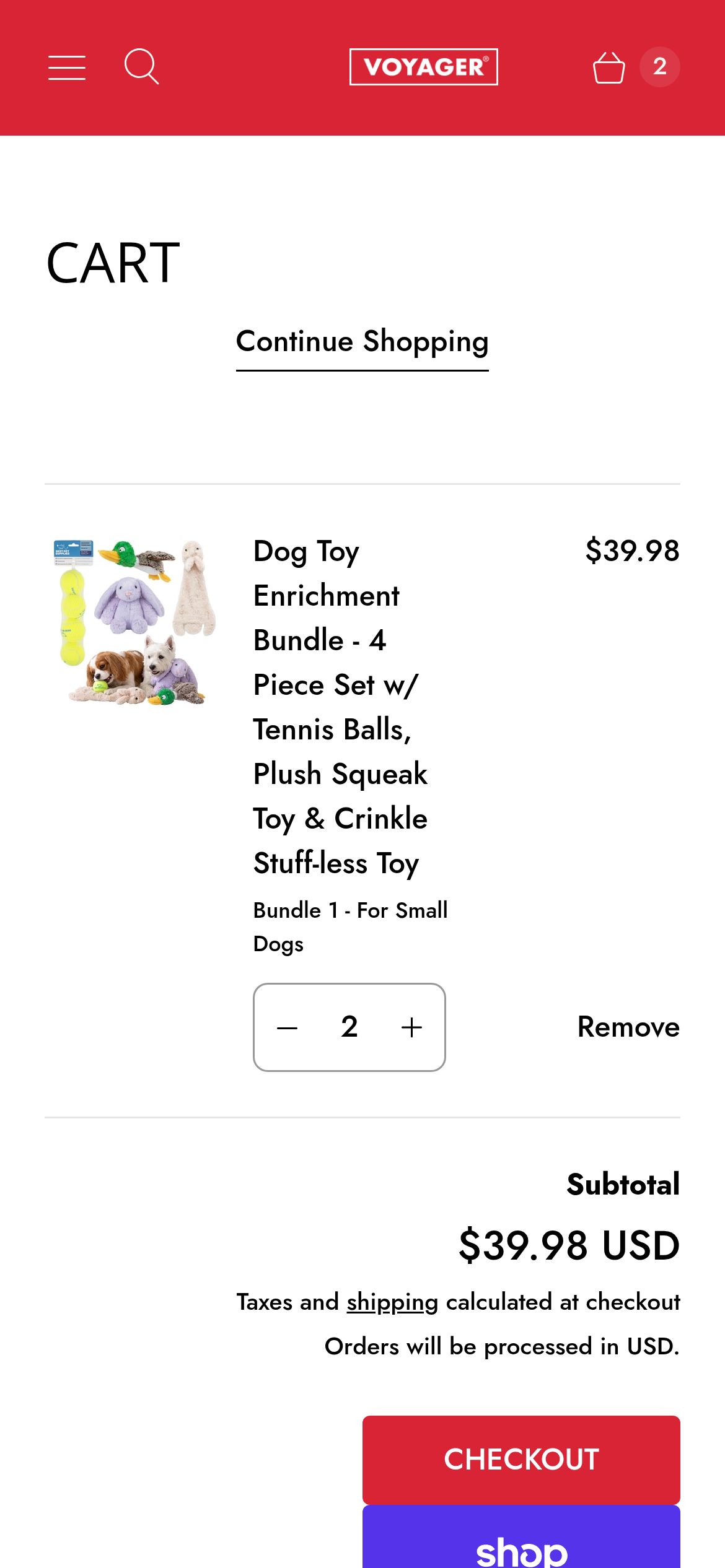
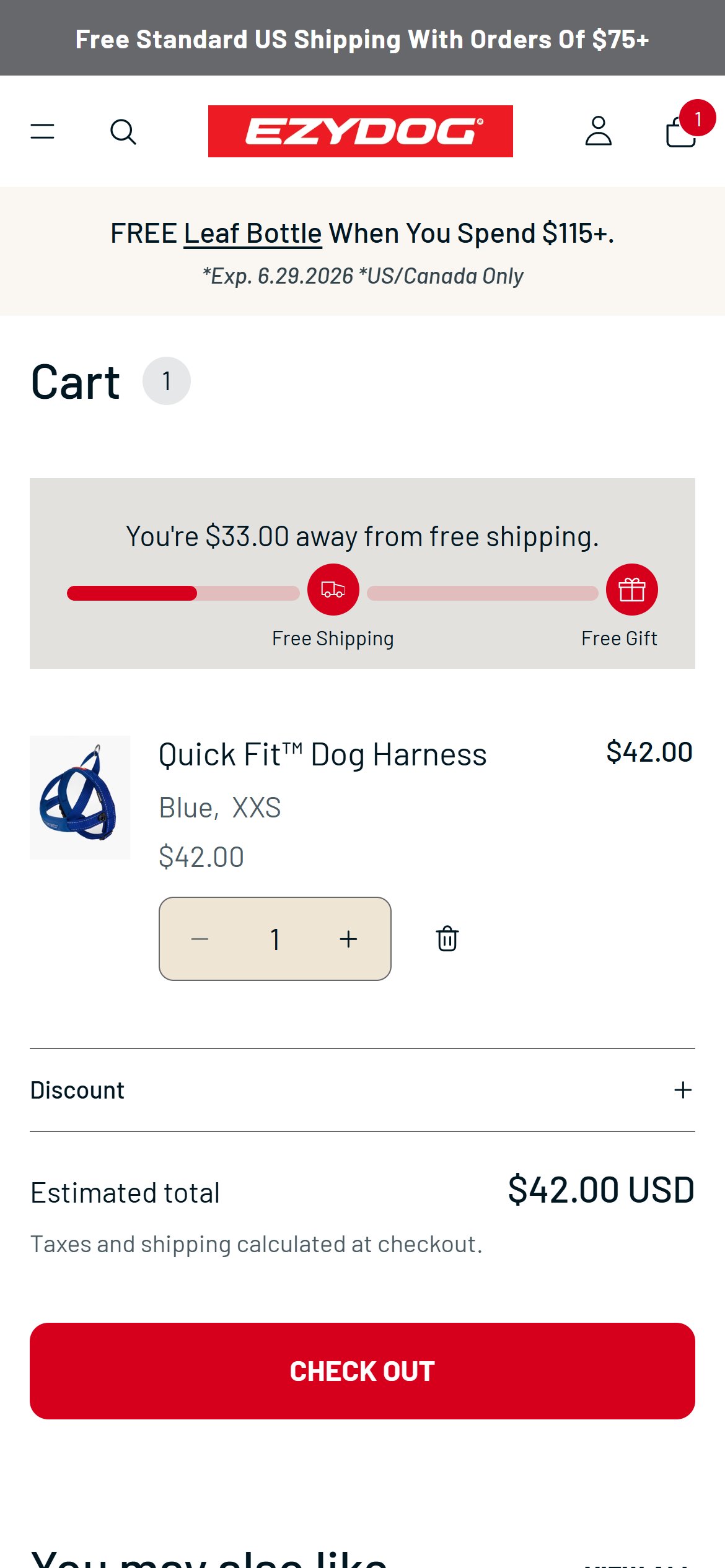
- The cart page has no visible discount code input field.
- Customers who have a promo code (from email, social, or influencer campaign) cannot apply it at the cart stage — they must wait until Shopify checkout.
- This creates friction for coupon-led campaigns and can lead to cart abandonment when shoppers leave to hunt for discount codes.
- Add a 'Discount code' input field to the cart page.
- This is a standard Shopify cart feature that can be enabled via the theme or a lightweight cart-drawer upgrade.
- Displaying the discount field in cart also signals to shoppers that deals exist, which can increase email sign-up rates.
App Ecosystem
What's installed vs what's missing from best-in-class Home & Living (Pet Accessories) stores
Present (10)
Missing (5)
App Stack Assessment
Voyager has 10 installed apps with solid analytics, reviews (Yotpo), and email (Drip). The advertising pixel stack (FB, Reddit, Amazon) shows paid acquisition sophistication. Critical gaps are cart optimisation (no shipping bar, no cross-sell) and customer retention (no loyalty program, no live chat). Firework is installed but appears inactive — a performance liability.
Confidential — Prepared for Voyager by Growisto | June 2026